


Construction scheduling has long been the domain of a select few — highly trained specialists wielding complex software tools like Primavera P6 or Microsoft Project.
While these traditional solutions served their purpose, they also created bottlenecks and communication gaps that can hinder project progress. Today, we’re witnessing a paradigm shift as a new generation of visual, collaborative scheduling tools emerges to democratize the process, especially on heavy civil and infrastructure projects.
This evolution is not just about new software; it’s about fundamentally changing how we approach project planning and execution in the construction industry.
Traditional Scheduling Paradigm
For decades, construction scheduling followed a top-down approach. A small group of scheduling experts would create intricate Gantt charts and critical path analyses, often working in isolation from the broader project team.
This “high priesthood” of schedulers became the gatekeepers of project timelines, creating several challenges:
- Limited accessibility — Only those trained in specialized software could meaningfully interact with or update schedules. This created a bottleneck where all schedule-related information had to pass through a small number of individuals, often leading to delays in communication and decision-making.
- Communication barriers — Field teams often struggled to interpret complex Gantt charts, leading to misunderstandings. The abstract nature of these charts made it difficult for many team members to visualize how their work fit into the overall project timeline, which could result in misalignment of efforts.
- Slow updates — Changes to the schedule had to funnel through the scheduling team, causing delays in reflecting real-world progress. This lag time could lead to decisions being made based on outdated information, further complicating project execution.
- Lack of collaboration — The siloed nature of scheduling made it difficult for various stakeholders to provide input or flag potential issues early. Valuable insights from field personnel or subcontractors were often lost or delayed in the process, preventing timely interventions that could mitigate risks.
- Inflexibility — Traditional scheduling tools, while powerful, were often rigid and unable to quickly adapt to the dynamic nature of construction projects. This inflexibility could lead to schedules becoming outdated almost as soon as they were created, rendering them ineffective for real-time project management.
Need for Change
Heavy civil and infrastructure projects amplify these challenges due to their scale and complexity. These projects often involve:
- Multiple subcontractors — Each subcontractor may have its own schedules and priorities, which can lead to conflicts and misalignment if not managed properly.
- Extended timelines — Projects can span months or even years, increasing the likelihood of changes and unforeseen circumstances that require agile responses.
- Intricate dependencies — Delays in one area can have cascading effects across the entire project, making it essential for all team members to be aware of their interdependencies.
- High stakes — With significant public interest and investment at stake, there is immense pressure to deliver on time and within budget.
- Geographical spread — Work often occurs across large areas or multiple sites simultaneously, complicating coordination efforts.
- Environmental and regulatory considerations — These factors can impact timelines significantly and require rapid adjustments to plans.
In this environment, the traditional scheduling approach can become a significant bottleneck. When only a handful of people can effectively manage and update the schedule, it creates a single point of failure that limits the project’s ability to adapt quickly to changes. This can lead to costly delays, miscommunications, and missed opportunities for optimization.
Rise of Collaborative, Visual Scheduling
The new generation of scheduling tools addresses these pain points by focusing on two key principles:
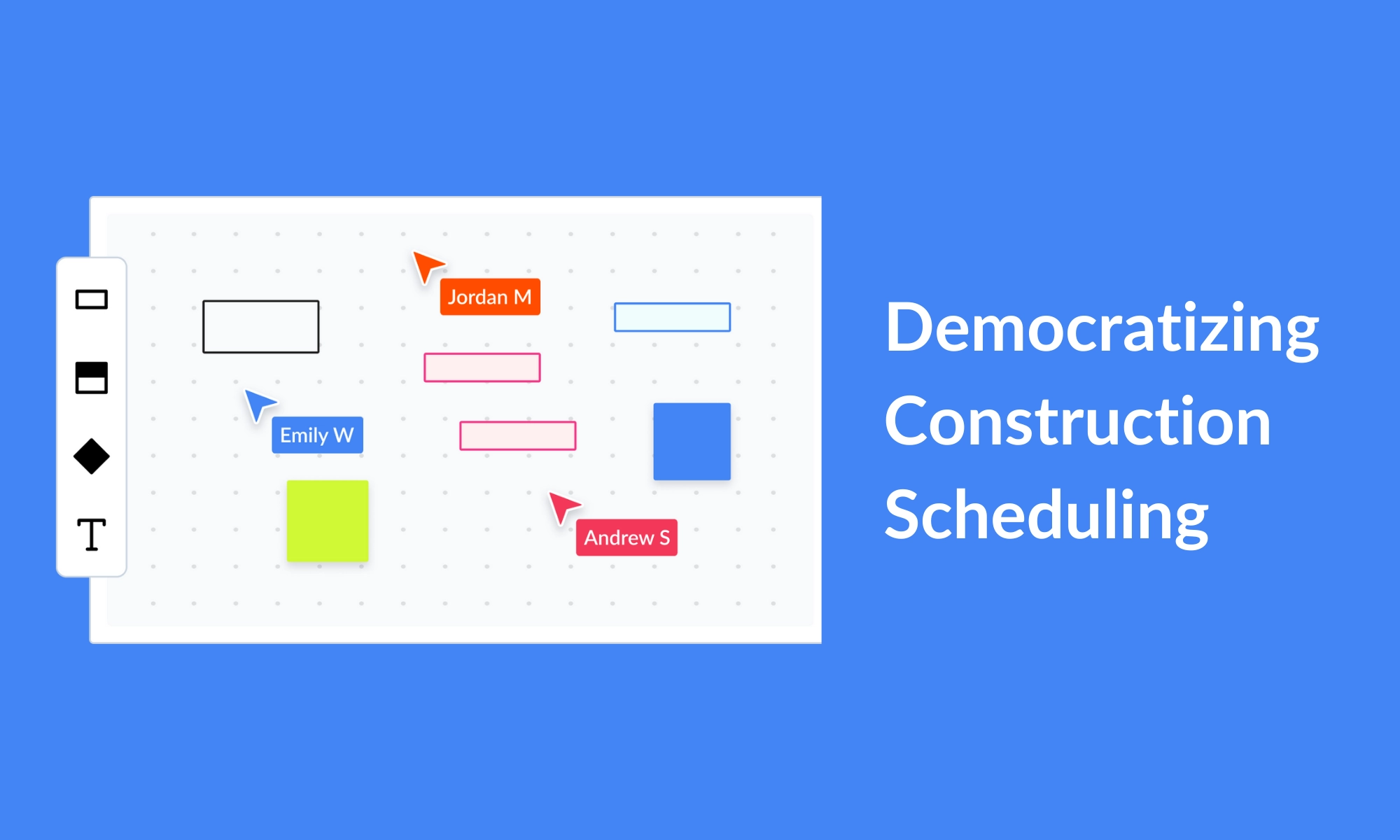
- Visualization — Moving beyond Gantt charts to more intuitive, visual representations of different project steps allows team members to see how their work fits into the bigger picture. Similar in spirit to the “sticky notes on the trailer wall” approach inherent in traditional pull planning, these visual representations enable teams to develop schedules that include thousands of activities without losing clarity.
- Collaboration — Enabling multiple team members to contribute to and interact with the schedule in real-time harnesses the collective knowledge and experience of the entire project team. This collaborative approach fosters an environment where innovative solutions can emerge from diverse perspectives
These principles combine to democratize the scheduling process, bringing numerous benefits:
- Improved communication — Visual scheduling tools allow project managers to create clear timelines that can be shared with all stakeholders. Instead of abstract bar charts, teams can see their work represented in simple layouts that bridge gaps between office and field operations.
- Enhanced collaboration — By making schedules accessible to a broader range of team members, these tools foster collaboration. Diverse team members can review proposed schedules, flag potential problems, and suggest changes — leading to innovative solutions that might not have been apparent initially.
- Reduced training overhead — Intuitive visual interfaces significantly reduce the learning curve associated with scheduling software. More team members can actively participate without extensive training, further breaking down silos within teams.
Implementing Democratized Scheduling
While the benefits are clear, implementing democratized scheduling requires careful planning and a shift in organizational culture. Here are some key steps for success:
- Start with a pilot project — Choose a smaller project or a specific phase of a larger project to test the new approach. This allows teams to learn and adapt while controlling risk.
- Provide targeted training — While new tools are more intuitive, it’s still essential to provide training tailored to different roles. Focus on how each team member can contribute effectively.
- Establish clear processes — Define who can make what types of changes to the schedule and how conflicts will be resolved. Clear guidelines ensure that democratization doesn’t lead to chaos.
- Encourage adoption through demonstration — Show team members how their input directly impacts outcomes by using real examples from pilot projects that illustrate tangible benefits.
- Maintain oversight — While democratizing processes is vital, maintaining a clear chain of responsibility is crucial for effective management.
- Continuously gather feedback — Regularly solicit input from all users for ongoing improvements
Overcoming Resistance
Change can be challenging in an industry as traditional as construction. But common objections can be overcome:
- “We've always done it this way” — Demonstrate how new approaches address current pain points using case studies or data from pilot projects showing tangible benefits.
- “It’s not accurate enough” — Show how broader input increases accuracy compared to traditional methods by catching issues early.
- “We'll lose control” — Emphasize that democratization doesn't mean anarchy; clear processes maintain control while enhancing flexibility.
Future of Construction Scheduling
As we look ahead, trends towards democratized scheduling are likely to accelerate with advancements such as:
- AI integration — Utilizing AI for predictive insights could analyze historical data alongside current progress for optimal sequencing.
- Augmented reality (AR) — AR technology may allow team members to visualize project timelines in three dimensions.
- Enhanced mobile capabilities — As mobile devices evolve, full-featured scheduling tools will become more accessible on tablets or smartphones.
- IoT integration — Automating schedule updates based on real-world progress through IoT devices will streamline operations significantly.
- Improved data analytics — Advanced analytics will provide deeper insights into performance trends that inform future decisions.
The democratization of construction scheduling represents a significant leap forward for heavy civil and infrastructure projects. By breaking down barriers to participation with collaborative visual tools, we can improve communication and agility while delivering better outcomes.
Transitioning toward this more democratic approach presents challenges but offers substantial benefits, including improved collaboration, reduced delays, and more accurate timelines. The future isn’t merely about better software; it’s about fostering an inclusive culture within project management that enhances our ability to deliver complex projects on time while creating engaging environments for all team members.
This article was originally published in Construction Magazine.
You deserve better scheduling software.
Drive revenue, reduce costs, and manage scheduling with Planera.
Request a Demo