June 17, 2026
June 17, 2026
Read time visible on live site

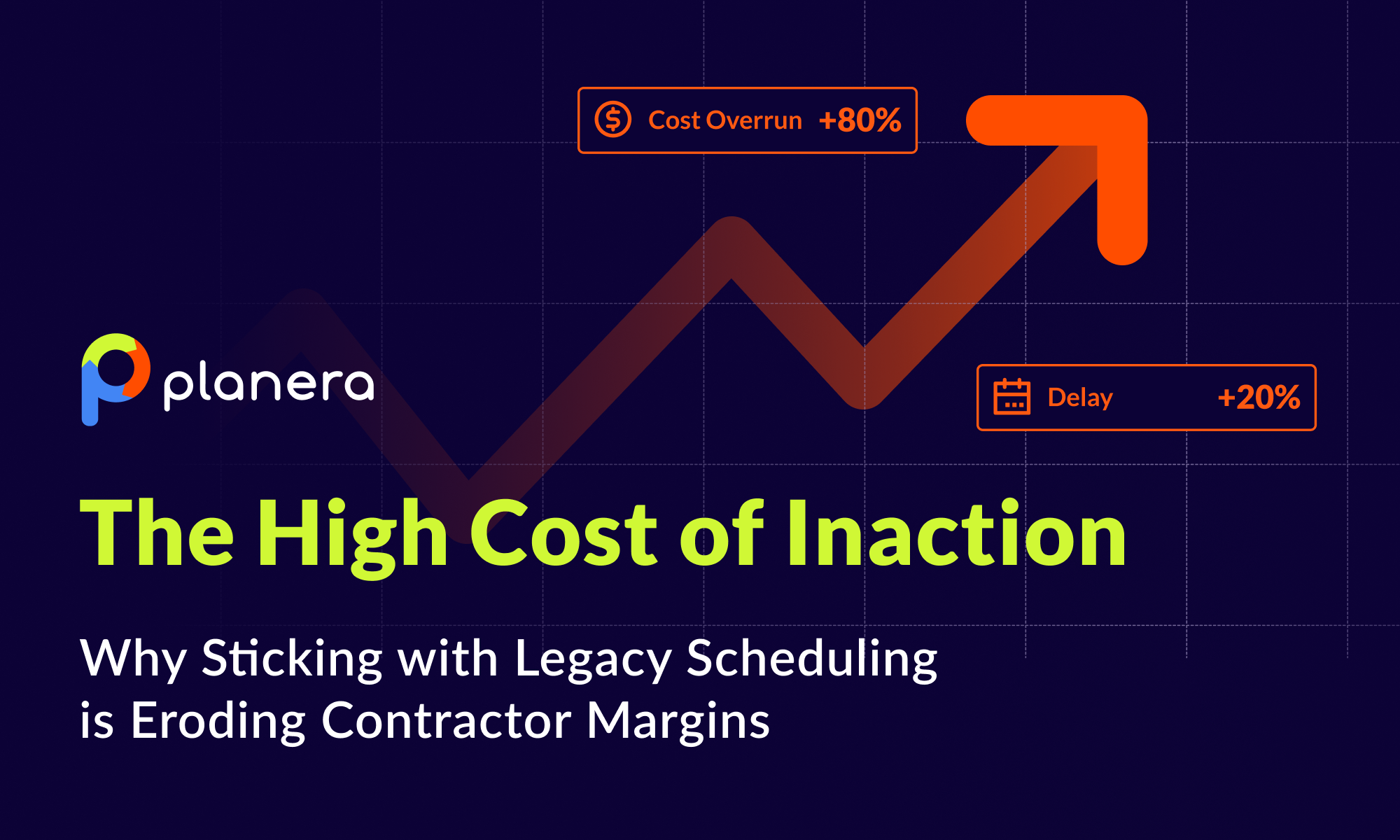
The High Cost of Inaction: Why Sticking with Legacy Scheduling is Eroding Contractor Margins

In the construction software industry, the biggest competitor is rarely another technology platform; it is the status quo. For general contractors (GCs), the decision to do nothing and stick with legacy scheduling tools like Oracle Primavera P6 or Microsoft Project feels like the safe, easy path. However, this inaction carries an immense, quantifiable financial toll.

Rather than focusing merely on software features, executives must confront the actual business impact of relying on outdated scheduling methods. From unconstructible baseline schedules and hidden delays to severe resource bottlenecks and expensive litigation, the "old way" of doing things is quietly draining profitability. The solution lies in transitioning to a modern, visual, collaborative Critical Path Method (CPM) platform like Planera, which eliminates the friction of legacy systems and transforms the schedule into a dynamic driver of project success.

Here is an in-depth look at the high costs of inaction that general contractors incur every day.

1. Margin Fade Before the Project Even Starts

The cost of inaction begins the moment a project is awarded. Historically, baseline schedules are created by schedulers in a silo, detached from the field teams who will actually build the project. Because legacy systems like P6 are difficult to use and lack real-time collaborative features, superintendents are rarely involved in building the baseline schedule.

As a result, the field team instantly lacks faith in the master schedule and frequently abandons it to build their own parallel plans in disconnected Excel spreadsheets. When a schedule is fundamentally unconstructible, margin fade occurs before the job even breaks ground...executives simply do not know about it yet.

Furthermore, relying on old-school tools during the bidding phase generates massive liability. Contractors often take "sloppy shots on goal" during the pre-construction phase by repurposing old templates, effectively signing in blood for delivery dates based on poor scheduling logic. Using a modern tool to standardize accurate templates ensures that GCs only pursue projects they can confidently deliver with healthy margins.

2. Decision Latency and "Paper Cut" Delays

Legacy platforms transform scheduling from an active planning mechanism into a reactive, episodic reporting tool. Because tools like P6 are overly complex, teams cannot dynamically update the schedule or test "what-if" scenarios during planning meetings. Instead, they must ask the scheduler to manually build out options, leading to follow-up meetings and days of "decision latency."

In the field, this latency forces superintendents to make on-the-fly decisions based on instinct rather than the physics of CPM logic. If an electrical subcontractor arrives with a smaller crew than expected, the superintendent adjusts on the fly—but without a live CPM schedule, they do not understand the compounding downstream impacts of that choice. These instinct-based decisions act as a series of "paper cuts" that compound over the life of the build.

3. The Hidden Crises of Schedule Compression

Schedule compression is an inevitable reality in construction, but the true danger lies in compression that remains hidden in plain sight. Because field changes are not immediately reconciled with the master schedule in legacy systems, teams often push delays down the road, believing they can buy back time in later months.

Ultimately, this unseen compression stacks up in the final 90 days of the project, creating a "vertical bar" of overlapping activities. When a project reaches this crisis point, the costs skyrocket:

  • Overtime and Premium Costs: GCs are forced to accelerate work, throwing bodies at the problem and paying time-and-a-half for overtime. Subcontractors issue "tags" or "tickets" charging the GC for these premium hours.
  • Eating the Margin: If the GC has been using disconnected spreadsheets and poor record-keeping, they cannot justify passing these overtime costs onto the responsible party. The GC is forced to eat the cost, draining their internal contingency budgets and resulting in direct margin fade.
  • Safety and Reputational Harm: Squeezing multiple trades into tight timeframes reduces quality, decreases productivity, and dramatically increases safety risks. Furthermore, arm-twisting subcontractors to work 6-day weeks or 12-hour shifts causes burnout and reputational harm, damaging relationships in an era of chronic labor shortages.

4. Lost Time in Scheduling "Rituals" and Talent Bottlenecks

The schedule is the heartbeat of a job, requiring repeating rituals such as daily, weekly, and monthly updates. In systems like P6 or Microsoft Project, these rituals involve double data entry, exporting to PDFs, chasing down field input, and manual reconciliation. This administrative burden costs thousands of hours over the lifetime of a single job. By moving to Planera’s single source of truth, teams cut the time spent on these rituals in half while drastically improving output accuracy.

Additionally, the construction industry is facing a severe personnel shortage for specialized roles. Legacy software requires extensive training, meaning companies often have job listings open for over a year trying to find P6 schedulers. This resource bottleneck literally constrains a company's ability to take on new work and grow. Modern, intuitive tools like Planera eliminate the need for a Ph.D. in scheduling to run the software, empowering project managers and superintendents to take ownership of the schedule and allowing the GC to efficiently scale their operations.

5. Poor Record-Keeping, Litigation, and Unclaimed General Conditions

Changes happen constantly on job sites. When a GC uses old tools that make documentation difficult, they lose the ability to prove the cause and effect of those changes in real-time.

If an owner-driven change causes a delay, the GC needs to justify a schedule extension to reclaim their General Conditions (the cost of keeping PMs, trailers, and safety staff on-site for extra weeks). If the GC waits months to raise the issue because their scheduling tool couldn't track it properly, the situation devolves into an adversarial dispute. Often, this leads to costly litigation where only the lawyers get rich. Modern platforms provide the auditability and traceability required to have logical, data-backed conversations with owners in real-time, preventing disputes and preserving capital.

6. The Absence of Long-Range Resource and Scenario Planning

Legacy systems make it incredibly difficult to aggregate resource and equipment planning across multiple projects. Without long-range visibility, GCs are forced to move heavy earth-moving equipment inefficiently between sites, incurring massive transportation costs. In contrast, platforms like Planera allow teams to see equipment and crew bottlenecks 6 to 12 months in advance, giving them the runway to enter into favorable lease agreements or proactively coordinate with subcontractors.

Furthermore, when things inevitably go wrong, traditional systems are too cumbersome to quickly model multiple recovery options. GCs are forced to rely on a single, gut-feel recovery plan. A modern platform allows for rapid scenario analysis, enabling teams to confidently execute high-value project recovery and resequence delays before they derail the final delivery.

Conclusion: Securing the Future with Better Data

The cost of doing nothing is no longer acceptable. Relying on disconnected spreadsheets and highly complex legacy software directly results in schedule compression, unrecoverable subcontractor premiums, legal exposure, and lost growth opportunities.

Furthermore, as the industry marches toward an AI-driven future, the quality of a contractor's data will determine their success. Legacy tools trap project histories in silos, meaning the valuable "as-built" lessons from one project are entirely lost when planning the next. By adopting an intuitive, collaborative platform like Planera, field teams actively engage with the schedule, creating rich, high-quality data records that will eventually power AI models to generate tighter, more intelligent schedules from day one.

General contractors who overcome the status quo will not only protect their existing margins from hidden fade, but they will establish themselves as innovative partners capable of winning the industry's most lucrative projects.

Media Contacts

You deserve better scheduling software

Powerful can be easy. Book a demo to see how.

sales@planera.io
3001 Bishop Drive, San Ramon, CA 94583
Democratizing the Construction Schedule: How Superintendents at Big-D, Balfour Beatty, and Creative Contractors Are Driving Projects with Planera
The High Cost of Inaction: Why Sticking with Legacy Scheduling is Eroding Contractor Margins
What's new in Planera (June 2026): schedule changes with Manny, searchable notes, and more
Construction Fast Tracking: What It Is, When to Use It, and What Can Go Wrong
Lean Construction Scheduling: Principles, Techniques, and Benefits
Pull Planning in Construction: Process, Benefits, and Examples
Construction Sequence Plan: How to Sequence Work for Better Project Flow
9 Best Touchplan Alternatives for Construction Project Management in 2026
9 Best Outbuild Alternatives for Construction Project Management in 2026
Critical Path Method (CPM) in Construction: A Full Guide
What's New in Planera: May 2026
The Best Procore Alternatives for Construction Scheduling
Moving From
Legacy Tools to Modern CPM, the Complete Guide for Modern Construction Teams
Elevating Construction Success: The Planera Support Advantage
The Shift from Oracle P6 to Planera: Why Leading Contractors are Choosing Collaborative Scheduling
Lookahead Scheduling in Construction: How to Plan Without Slowing the Job Down
New AI Agent Changes Construction Scheduling..Are Schedulers Now Redundant?
Construction Scheduling 101: Complete How-to Guide for Project Managers [2026]
What's New in Planera: April 2026
Planera Releases AI Schedule Assistant; DPR Rolls Out ConstructivIQ on 120+ Projects
Planera Launches Manny, Turning Construction Schedules Into Live Decision Engines
Scheduling Without a Data Date Is Not Just Bad Practice, It's a Liability
Best Microsoft Project Alternatives in 2026 (Top Tools Compared)
July Product Updates: Better bulk actions, Hide collaborator cursors & more
August Product Updates: Four new features + a speed boost you’ll love
September Product Updates: Smarter Permissions, Sharper Insights, Richer Context
October Product Updates: New sorting for P6 imports, flexible IMS, edit-in-Gantt, and more
November Product Updates: Clearer navigation, smarter safeguards, and smoother interactions
December Product Updates: update schedules with confidence, investigate issues faster, and avoid cleanup work
10 Best Primavera P6 Alternatives for The Construction Industry in 2026
The MS Project Retirement: Why Construction Leaders are Securing Their Future with Planera
February 2026 Product Marketing Update
How to Read and Use a Gantt Chart for Construction Scheduling
Best Construction Workflow Management Software Picked for 2026
11 Best CPM Software of 2026 for Your Construction Project
Building Data Centers Faster and Smarter: Visual, Collaborative Scheduling Isn’t Just an Option—It’s a Business Mandate.
How Big-D Construction uses Planera to avoid ‘death by 1,000 paper cuts’
The Future of Construction Scheduling for GCs to Improve with AI using Planera
11 Best Construction Management Software Platforms to Compare in 2026
From Trailer to Tablet: Making Schedules Work Where the Work Happens
12 Digital Construction Tools Every Contractor Needs in 2026
50 Best Construction Scheduling Software Platforms in 2026
Change Leader: Why Infrastructure Projects Lose Margin Before They Break Ground
Planera Adds Industry Leaders Matt Burness and Mark Baracani to Strengthen Product and Construction Expertise
Planera Expands Data Centre Presence with New Funding
‍Planera Accelerates Data Center Expansion, Raises $8M in New Funding
Miles-McClellan Expands Scheduling with Planera for iPad
Planera September Update: Smarter Permissions, Sharper Insights, Richer Context
AMLI Residential Selects Planera to Transform Project Scheduling and Field Collaboration
The Future is Hybrid: Why Modern Construction Demands both CPM and Lean
The Evolution of Construction Scheduling in the Design-Build Era
Planera Featured on the Art of Construction Podcast
Report: Legacy Tools & Hiring Top Concerns Amid Construction Boom
Sticky Notes Don’t Scale: 5 Reasons to Choose Logic-Driven Scheduling
Drill Tech Selects Planera for Schedule-Critical Tunnel Projects
Scheduling That Keeps Up with Data Center Demands
Bridging the Skills Gap: PlaneraEDU Prepares Digital Jobsite Pros
Watch the Webinar! Planera Field Schedules Linked to Master Plan
Planera Wins 2025 Gold Globee® Award for Disruptors
Planera Launches Collaborative Field Scheduling for Teams
Planera CEO Nitin Bandhari Featured on ENR's Critical Path Podcast
Nitin Bhandari Wins Best Innovative Entrepreneur Award
Not a ‘Shiny Toy’: Contractor Overhauls Scheduling Without Hype
Planera Featured on Construction Conversations Podcast
How Planera Improves Construction Planning with Visual Workflows
Zachry Construction Uses Planera to Optimize Resource Scheduling
Planera Launches Visual, Collaborative Field Scheduling on iPad
Planera Featured on Category Visionaries Podcast
Now Live: Planera on iPad
Planera Featured on AEC Trailblazers: The Founders Files Podcast
Full-Stack Scheduling: Transforming Specialty Contracting Projects
Feature Updates: Variance insights, linked schedules, and more!
Monthly Feature Highlights: More Control for Better Collaboration
Planera and Big-D Construction Partner to Drive Scheduling Innovation
Construction Magazine Feature: Democratizing Scheduling
Take Control: New Features for Secure Collaborative Scheduling
Silo Busting: Why Collaboration is Critical to Construction Success
Planera CEO Featured on The Digital Executive Podcast
Visual Scheduling Tech Boosts Construction Productivity in 2025
January Monthly Feature Highlights
Planera Offers Free Scheduling Software to U.S. Universities
Planera Wins Great Graphics Contest at CPM Conference
Planera Surpasses 25 Million Days of Schedule Managed
2024 in Review
Product Updates: Planned % Complete, Variance Codes & More
Product Updates: Trace Path, ALAP Constraint & Sorting Options
Planera Achieves SOC 2 Type 2 Compliance
Beyond Deadlines Podcast with Nitin Bhandari
Hugh Seaton Hosts Nitin Bhandari On His Constructed Futures Podcast
Planera raises $13.5M to help solve the gnarly problem of scheduling for construction contractors
5 Contech Firms Raise Over $126M
Sept '24 Updates: Float Path, Table/Gantt Commenting, S Curve
CSU East Bay Finds Visual Scheduling Superior to Tabular Tools
2024 Construction Planning Trends to Watch
Save Filters to Use Later
Multiple Project Versions to Eliminate Clutter and Mistakes
Master Risk with Monte Carlo Simulations
Turbocharge Scheduling: DCMA 14 Integrated with CPM Scheduling
Scotland Foss Joins Planera as Company’s First Head of Sales
Planera + Autodesk Cloud: Streamlined Scheduling & Planning