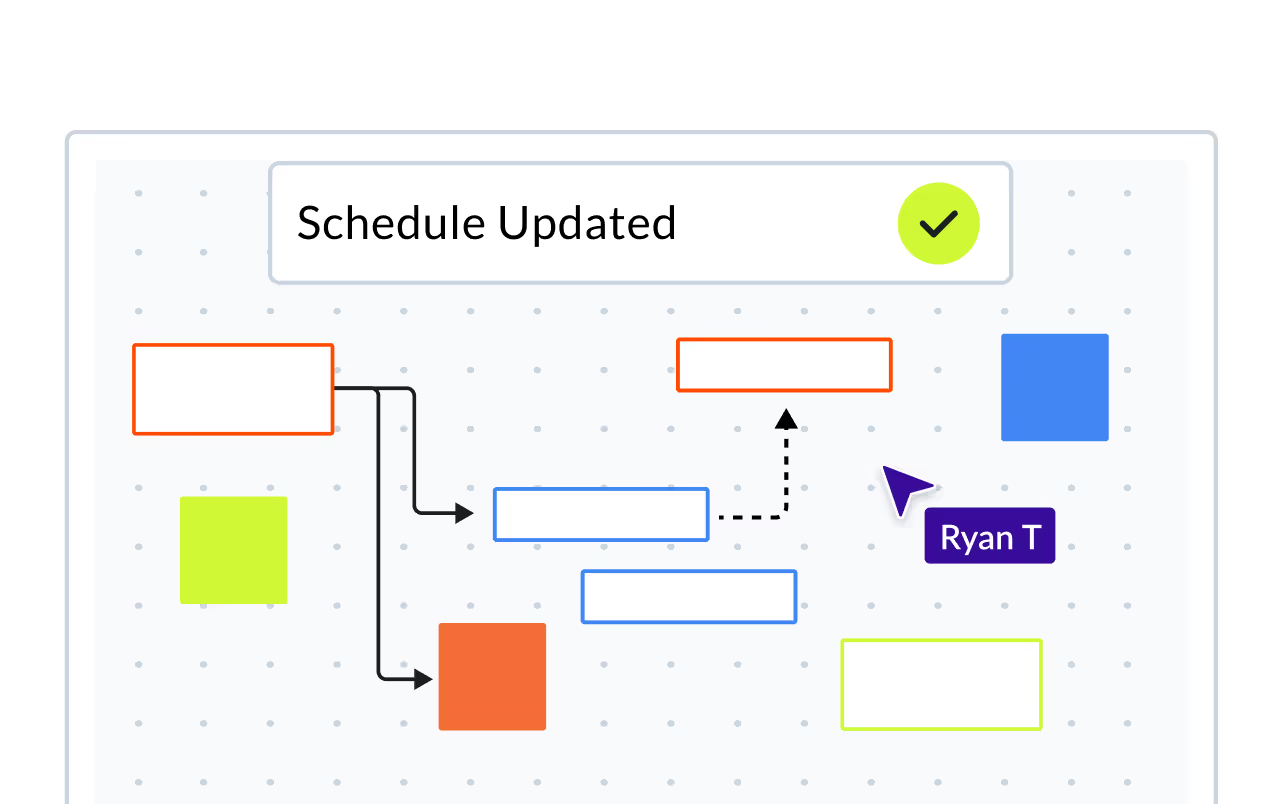

The Future of Construction Scheduling
Learn how industry leaders stay competitive by modernizing planning workflows across their organizations.















Hear from our Customers
.webp)
“Planera has helped us make our schedules more accurate and efficient.”


"I am finally out of schedules as my Superintendents are now owning, maintaining and running the schedules.”

.webp)
"Everyone is able to easily contribute to the schedule which ensures accuracy and stakeholder alignment."


Frequently Asked Questions
To help you make an informed decision, we've compiled some of the most commonly asked questions.
What types of construction companies have switched to Planera?
Our case studies feature general contractors, specialty contractors, and infrastructure builders across commercial, industrial, data center, and civil construction. Companies range from mid-market firms to ENR 100 contractors like Balfour Beatty, HITT Contracting, and Big-D Construction.
What scheduling tools did these companies use before Planera?
Many case study companies migrated from Primavera P6, Microsoft Project, or a combination of spreadsheets and legacy tools. They imported their existing schedules via XER, XML, or MPP files and found that Planera preserved their logic, calendars, and relationships while giving them a faster, more collaborative workflow.
What results have construction teams seen after switching to Planera?
Common themes include faster schedule updates, broader team participation in the scheduling process, better schedule quality through automated DCMA checks, and more confident risk analysis via Monte Carlo simulation. The net effect is that scheduling becomes a team capability rather than a bottleneck.
How do construction companies use Planera's CPM scheduling engine?
Teams rely on Planera for full CPM scheduling: building network logic with all four relationship types (FS, SS, FF, SF), calculating critical path and float, applying constraints, running schedule quality checks, and managing resource assignments. Many brought their existing P6 workflows and found they translated directly.
Can I read case studies for my specific type of construction project?
We have case studies spanning excavation, interior construction, tunnel projects, residential, dam construction, and more. If you don't see your project type, reach out to our team. We can connect you with references in your sector or walk you through how Planera handles your specific workflows.