

.webp)


If you've ever watched a project slip week after week despite a "solid" baseline schedule, you're not alone. Nearly 80% of large construction projects face delays or cost overruns.
A lot of projects go over budget and are delivered late. Traditional top-down scheduling keeps producing the same outcomes. That's why more teams are shifting to lean construction scheduling, a workflow-focused approach that replaces static timelines with collaborative, field-driven planning.
In this guide, we’ll explain what lean construction scheduling is, the key principles behind it, the techniques teams use, its benefits and challenges, and how construction scheduling software can support lean planning in construction.
What Is Lean Construction?
Lean construction is a project delivery approach that focuses on creating more value while reducing waste throughout the construction process. It is based on lean manufacturing principles and was adapted from the Toyota Production System for the construction industry.
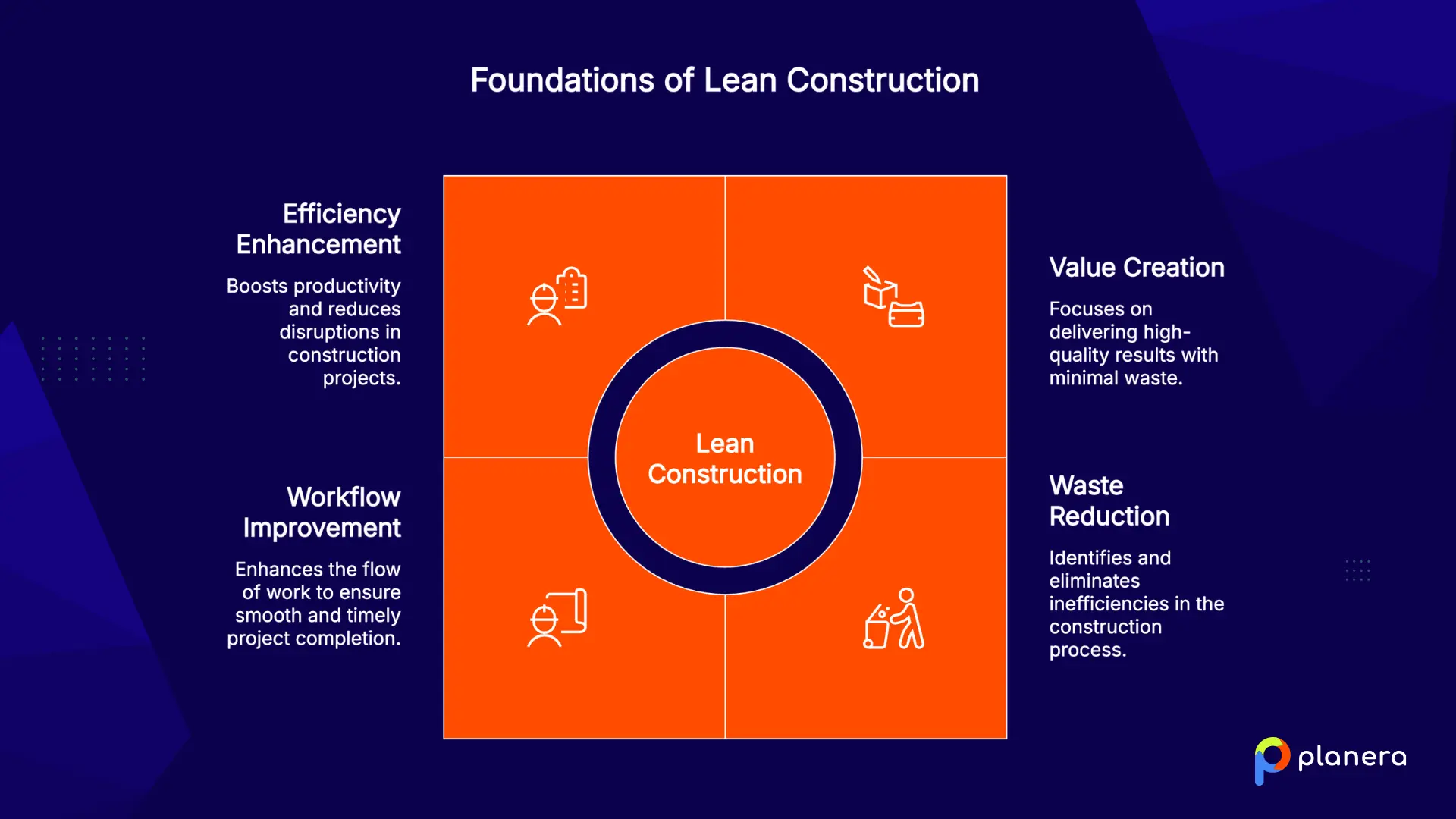
In lean construction, waste is not just unused materials. It also includes things like waiting for information, idle crews, rework, poor coordination between trades, unnecessary movement, and delays caused by inefficient planning.
The goal is simple: improve workflow, reduce inefficiencies, and help teams complete projects more predictably and efficiently. By focusing on how work moves through a project, lean construction helps teams deliver better results with fewer disruptions.
How Does Lean Construction Scheduling Work?
Lean construction scheduling manages workflow, not just isolated tasks. That distinction changes how schedules get built, updated, and followed.
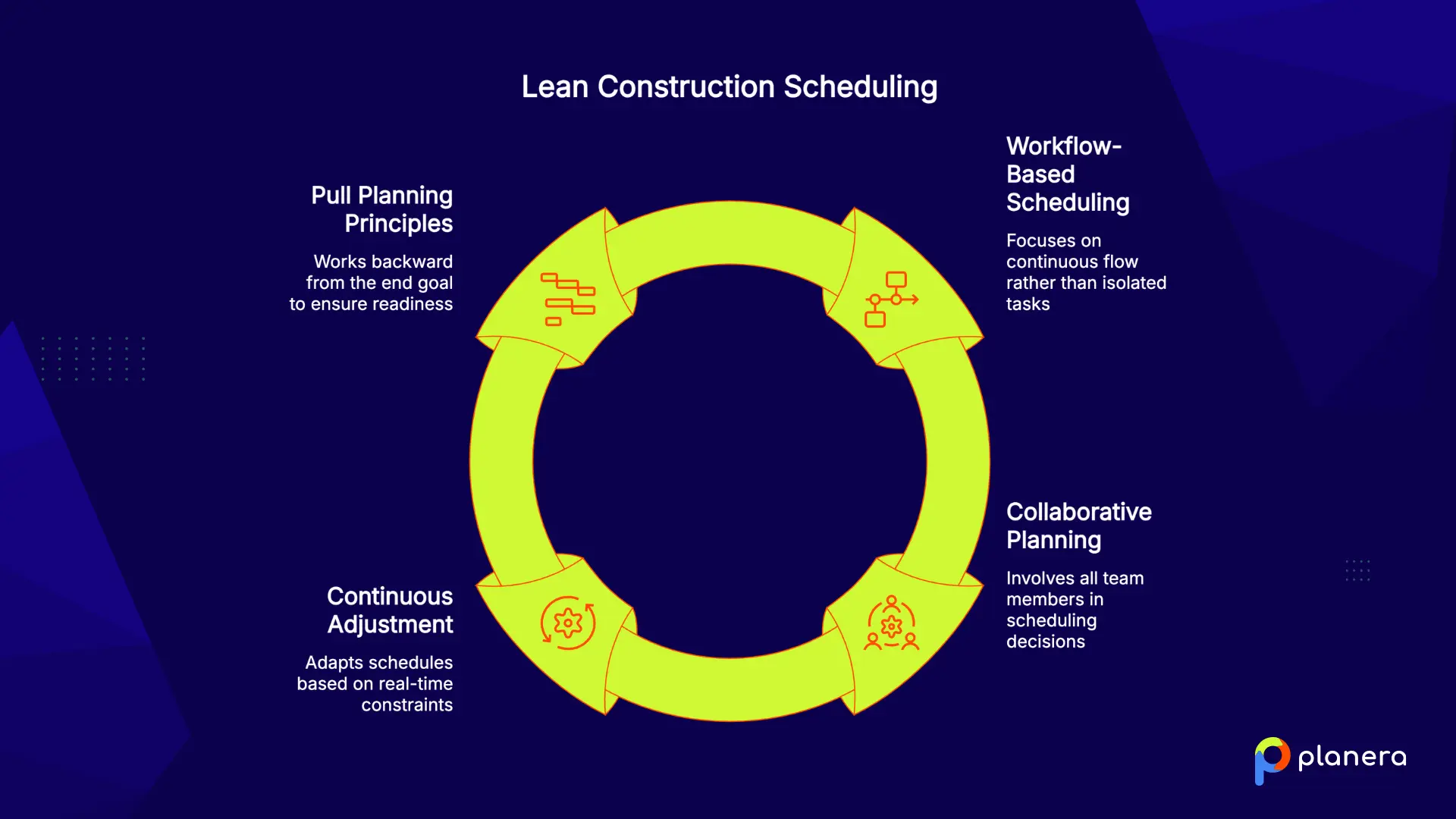
- Workflow-based scheduling instead of task-based scheduling. Traditional "push" scheduling assigns tasks based on a set timeline, regardless of whether the work is actually ready. Lean "pull" scheduling works backward from the project's end goal, assigning work only when the downstream team is ready to receive it. Crews keep a continuous flow rather than getting pushed into work that isn't set up for them.
- Collaborative planning across construction teams. Foremen, trade leads, project managers, and superintendents all take part in scheduling decisions. Making the workflow visible lets everyone spot and handle constraints together rather than leaving individuals to figure it out on their own.
- Continuous schedule adjustment and constraint management. Schedules aren't static documents. Missing materials, unanswered RFIs, pending inspections, and access issues get flagged early so they can be resolved before they stall the field. Spotting constraints during lookahead planning means only ready work makes it onto weekly plans.
- Pull planning principles. Work is pulled from the end goal backward, not pushed forward from the start. Teams figure out what's needed downstream before arranging tasks upstream, which prevents idle time and trade conflicts before they reach the site.
What Are the Main Principles of Lean Construction?
Lean construction rests on six principles that work together.
- The first is delivering value: defining what the owner actually needs in terms of schedule targets, cost limits, and quality requirements.
- From there, teams improve the value stream by mapping every step from design to turnover and removing anything that doesn't add value.
- The third principle, creating reliable flow, lines up work so crews can keep moving without stop-and-go interruptions. That requires the right people, materials, and sequence working together.
- Pull-based planning drives the fourth principle: work gets triggered by downstream need rather than pushed from upstream assumptions.
- Reducing variation comes fifth, because predictable commitments create predictable schedules.
- The sixth principle, continuous improvement, means teams review each project phase to capture lessons and apply them going forward.
Together, these principles shift how teams think about sequencing and accountability throughout the build. The project stops being a simple "transformation" and becomes a combination of flow and value generation.
What Are the Key Benefits of Lean Construction Scheduling?
Lean construction scheduling helps teams deliver projects with fewer delays and more predictable outcomes. Lean projects are 73% more likely to finish under budget and 80% more likely to finish on time.
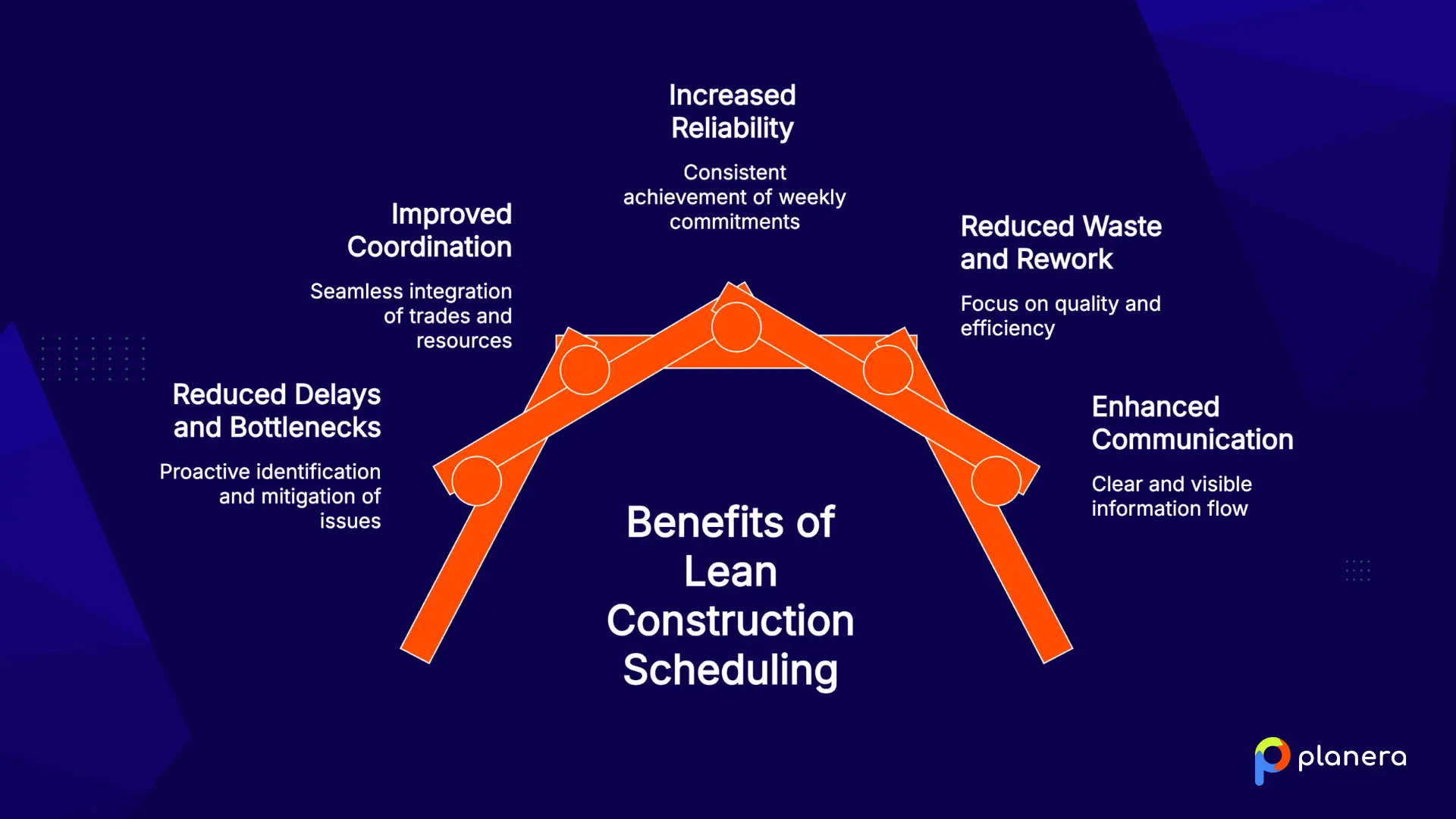
Reducing delays and bottlenecks
Lean scheduling uses lookahead planning to identify constraints several weeks in advance. Pull planning also ensures that no trade starts work until conditions are ready. This helps reduce idle time, avoid workflow interruptions, and prevent small issues from turning into major delays.
Improving labor and resource coordination
Crews, equipment, and materials are scheduled based on actual need instead of rough estimates. This improves coordination between trades and reduces clashes on site. It also helps avoid overcrowding in work zones and unnecessary movement of resources.
Increasing schedule reliability
Lean construction uses Percent Plan Complete (PPC) to track how often weekly commitments are met. When tasks are not completed, teams review the cause and adjust future planning. This creates more consistent workflows and helps teams improve planning accuracy over time.
Reducing material waste and rework
Lean construction focuses on doing work correctly the first time. Better planning and clearer coordination help reduce mistakes, rework, and wasted materials. Studies have shown that improving workflow efficiency can significantly increase labor productivity on construction projects.
Improving communication across teams
Lean scheduling makes plans, commitments, and constraints visible to everyone involved. Teams use visual planning tools and regular coordination meetings to stay aligned. This improves communication between trades and helps create stronger accountability at the field level.
Common Challenges in Lean Construction Scheduling
Lean construction scheduling can improve project outcomes, but it also comes with challenges, especially when teams are new to the process.
- Resistance to collaborative planning: Many supervisors and project managers are used to top-down scheduling and may resist shifting planning decisions to field teams. This change often requires leadership support, training, and early wins to build trust in the process.
- Poor communication between stakeholders: Lean scheduling depends on active participation from all trades. When subcontractors or field teams are not fully engaged, coordination gaps can appear and disrupt workflow between activities.
- Lack of real-time schedule visibility: Relying on manual boards or offline updates can slow down communication. Without real-time visibility, it becomes harder to track progress and respond quickly to changes on site.
- Difficulty tracking constraints and dependencies: As projects grow in complexity, it becomes difficult to manually manage blocked tasks, dependencies, and ownership. This is why many teams move toward digital tools for better control and clarity.
Lean Construction Scheduling vs Traditional Construction Scheduling
The two approaches differ across every dimension that matters.
| Dimension | Traditional (Push) Scheduling | Lean (Pull) Scheduling |
|---|---|---|
| Planning approach | Centralized, top-down | Collaborative, field-driven |
| Task assignment | Based on estimated dates | Based on downstream readiness |
| Schedule flexibility | Static baseline; changes resisted | Continuously updated |
| Accountability | Supervisor monitors compliance | Team members make and honor commitments |
| Waste visibility | Rarely surfaces until overruns occur | Identified and removed proactively |
| Outcome predictability | Low; 80% face overruns | High; 73% finish under budget |

The future of construction scheduling isn't an either/or choice. As our research on hybrid scheduling outlines, leading firms are adopting a hybrid model: CPM for long-range forecasting and lean methods for field-level execution.
5 Lean Construction Scheduling Techniques Used on Modern Projects
Last Planner System (LPS)
The Last Planner System is the core lean scheduling framework. It brings the people closest to the work into making realistic, reliable weekly commitments. The cycle moves through construction master scheduling, phase and pull planning, lookahead scheduling, weekly work plans, and PPC measurement. The LPS tenet of "Should → Can → Will → Did" grounds commitments in actual field readiness rather than wishful timelines.
Pull Planning Sessions
Pull planning in construction are collaborative workshops where trade partners map work backward from project milestones using sticky notes or digital boards.. Each trade commits to tasks, durations, and handoff points. These sessions surface conflicts and constraints before they reach the field, building the reliable construction sequence that weekly work plans draw from.
Lookahead Planning
A construction lookahead schedule, usually a 4-to-6-week rolling plan, bridges the master schedule and the weekly work plan. Teams review upcoming activities, confirm material readiness, resolve design questions, confirm inspections, and clear access. Only constraint-free tasks make it onto weekly work plans.
Daily and Weekly Work Planning
Weekly plans capture what crews commit to doing in the next seven days, based on what's genuinely ready. Daily huddles of 10 to 15 minutes surface same-day issues, keep teams aligned, and let plans adjust in real time.
Constraint Management
Constraint management is the process of identifying, logging, and resolving blockers before they delay work. Common constraints include missing submittals, material delays, unresolved RFIs, pending inspections, and access conflicts. Constraint logs get reviewed during lookahead sessions, with named owners for each open item.
Best Practices for Implementing Lean Construction Scheduling
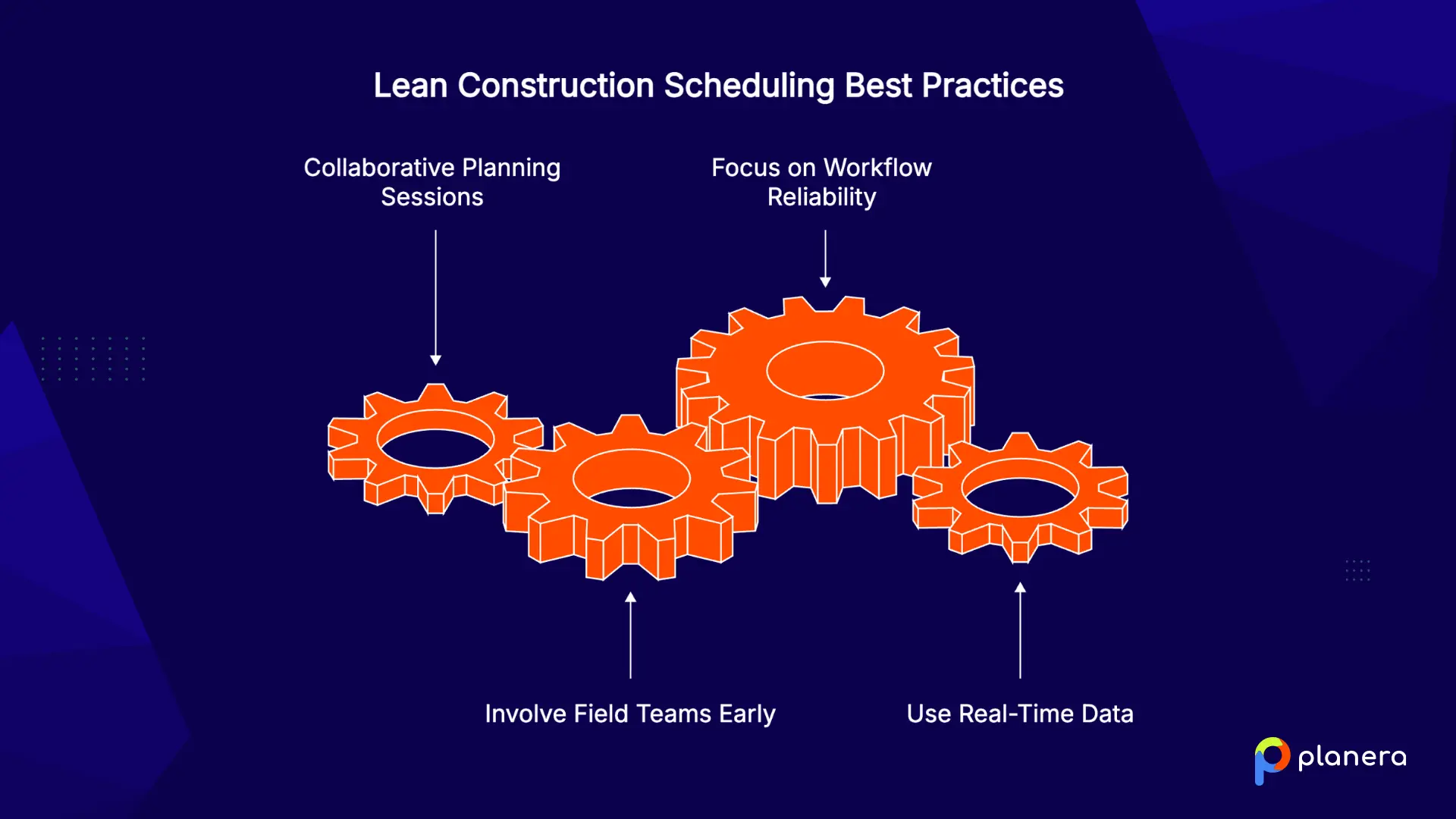
Start With Collaborative Planning Sessions
Don't bring lean scheduling in from the top down. Introduce it through a pull planning workshop at the start of a project phase. Let trades experience the process firsthand, because hands-on involvement builds buy-in faster than training alone.
Involve Field Teams Early in Scheduling
Foremen and trade leads who help create the schedule are more likely to honor commitments and flag problems early. Top-down schedules handed to field teams at kickoff routinely miss ground-truth constraints that experienced workers would have caught.
Focus on Workflow Reliability Instead of Static Timelines
Measure success by PPC, not by whether the original baseline stays intact. A lean schedule that adapts to real conditions and keeps crews moving is more useful than a static CPM chart that's three weeks behind reality.
Use Real-Time Data to Adjust Schedules Continuously
Digital scheduling tools give real-time constraint visibility, PPC dashboards, and variance reason tracking. Projects that review PPC data weekly and act on root causes prevent small delays from compounding across the project lifecycle.
How Planera Supports Lean Construction Scheduling
Planera is built for teams who want to run lean scheduling without giving up CPM structure in construction. The platform brings both approaches together so the office and field work from the same source of truth.
Key capabilities include:
- Visual collaborative scheduling for pull planning sessions where all stakeholders contribute in real time
- Field schedules for short-interval lookahead plans updated directly from the field, with iPad support
- Project dashboards that bring PPC metrics, variance reason codes, and performance analytics into one view
- CPM + Lean hybrid approach that bridges master schedule structure with field-level lean planning
- Autodesk Construction Cloud integration to keep schedules connected to project documents and BIM data
- AI Scheduling Assistant (Manny) for schedule quality checks and construction-specific guidance
FAQ
What is lean construction scheduling?
Lean construction scheduling is a workflow-focused planning approach that uses collaborative techniques such as pull planning and the Last Planner System to align crews, materials, and resources in a reliable sequence. Unlike traditional scheduling, it involves the people doing the work in creating and committing to plans, which reduces idle time, rework, and delays.
How does lean scheduling improve construction projects?
Lean scheduling improves projects by identifying and removing constraints before they stall field work, building accountability through weekly commitments, and continuously refining the schedule based on what's actually happening on site. Research shows lean projects are 73% more likely to finish under budget and 80% more likely to complete on schedule.
What is pull planning in lean construction?
Pull planning is a collaborative scheduling session where trade partners map work backward from a project milestone, which should also be captured in the construction milestone schedule. Each team identifies what must be completed before their work can begin, creating a reliable sequence driven by downstream need rather than pushed forward based on estimated dates.
What is the Last Planner System?
The Last Planner System (LPS) is the most widely used lean construction scheduling framework. Developed by the Lean Construction Institute, it involves foremen and trade leads making reliable weekly commitments, supported by lookahead planning, constraint removal, and Percent Plan Complete (PPC) measurement to improve schedule performance continuously.
How is lean construction scheduling different from traditional scheduling?
Traditional scheduling uses a centralized, top-down approach where project managers assign tasks based on estimated dates. Lean construction scheduling brings field teams into collaborative planning, drives work sequences from downstream readiness rather than upstream assumptions, and continuously adjusts to real-world conditions rather than holding to a static baseline.
What software is used for lean construction scheduling?
Tools like Planera support lean construction scheduling with visual collaborative planning boards, field-level lookahead schedules, PPC tracking dashboards, and AI-assisted scheduling. Planera bridges CPM master schedules with lean field execution, making it a practical platform for teams running the Last Planner System digitally.
What are the benefits of lean scheduling in construction?
Key benefits include fewer project delays, higher schedule reliability, reduced material waste, better labor coordination, and clearer communication across teams. Lean scheduling has been shown to increase labor productivity by 24% and deliver 15-30% shorter project completion times compared to traditional methods.
Can lean construction scheduling reduce project delays?
Yes. By identifying constraints 4 to 6 weeks in advance through lookahead planning and by building realistic weekly commitments with field teams, lean scheduling removes many causes of delay before they reach the job site. On major projects, lean tools have reduced schedule overruns by months, not just days.

You deserve better scheduling software.
Drive revenue, reduce costs, and manage scheduling with Planera.
Request a Demo