
.webp)


Tight deadlines and growing project demands often force construction teams to find ways to accelerate schedules. One of the most common approaches is construction fast tracking, a method that shortens project timelines by overlapping activities that would normally happen in sequence.
When done right, fast tracking can help projects finish sooner. When done poorly, it can lead to rework, coordination issues, and higher costs. On large projects, poor planning and delays can cause budgets to run up to 80% over budget.
This guide explains how construction fast tracking works, when to use it, its benefits and risks, and how construction scheduling software can help teams manage a fast-tracked project successfully.
What Is Construction Fast Tracking?
Construction fast tracking is a project delivery approach that shortens schedules by overlapping design, procurement, and construction activities. Instead of waiting for one phase to finish before starting the next, teams work on multiple phases at the same time.
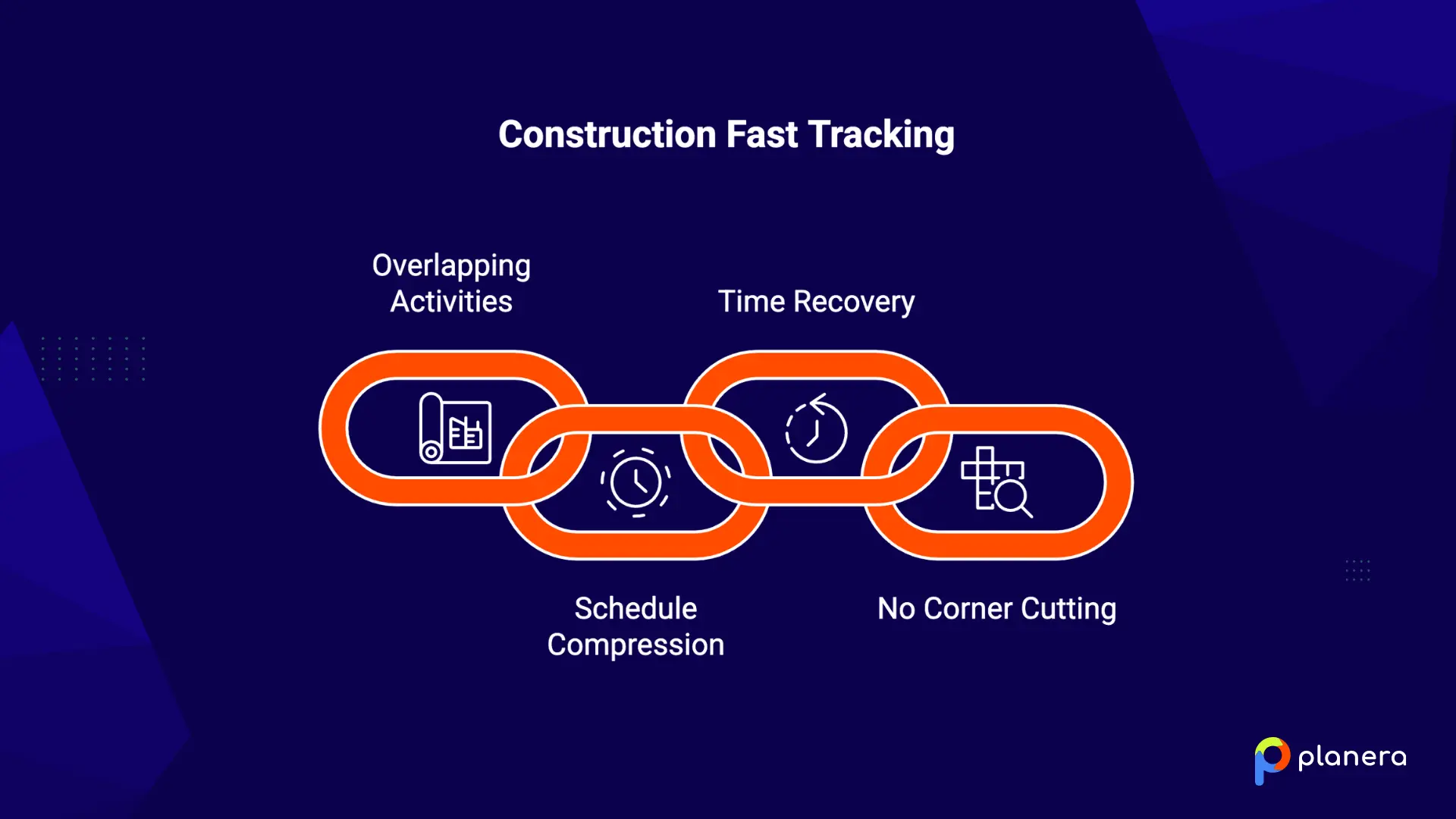
This differs from the traditional design-bid-build approach, where design, bidding, and construction happen one after another. In a fast-tracked project, construction can begin while later design packages are still being completed.
Fast tracking is not about cutting corners. It is a schedule compression strategy used to deliver projects faster and recover time on projects that are falling behind schedule. A construction lookahead schedule helps teams confirm which overlapping activities are actually ready to start.
How Construction Fast Tracking Shortens Project Timelines
Construction fast tracking reduces project duration by allowing multiple activities to move forward at the same time instead of waiting for each phase to finish before the next begins. Because these activities overlap, teams need a clear construction sequence plan before work begins to coordinate dependencies and avoid conflicts.
Overlapping Design and Construction Phases
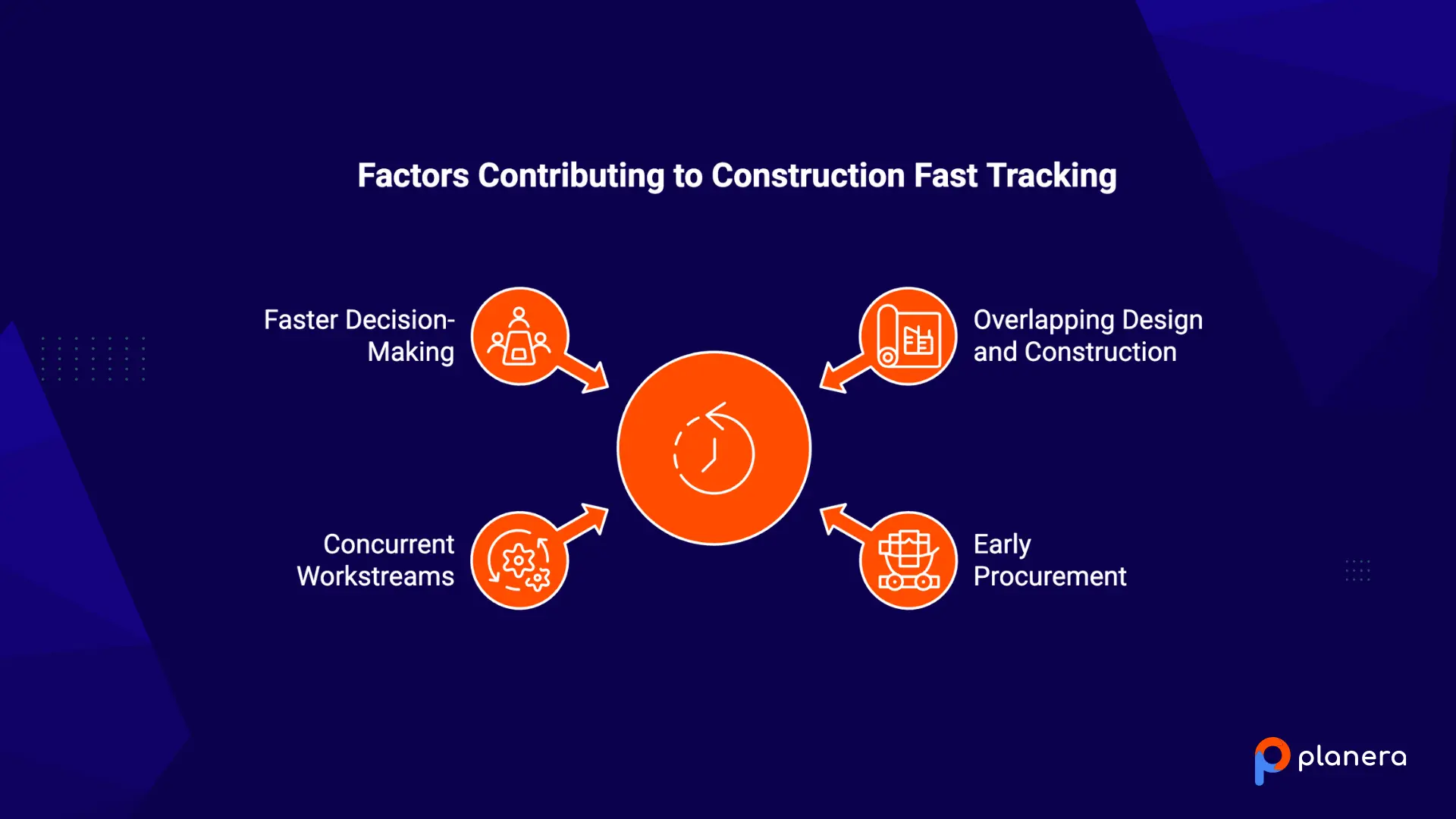
In a traditional project, construction does not begin until the design is complete. With fast tracking, the design is divided into smaller packages, allowing crews to start building while later portions of the design are still being developed.
For example, foundation work can begin while the design team continues working on structural or exterior systems. This overlap helps shorten the overall project schedule without reducing the actual duration of individual tasks. A clear construction sequence plan helps teams understand which activities can safely overlap and which tasks must stay in order to avoid rework.
Early Procurement and Mobilization
Fast-tracked projects often purchase long-lead materials and equipment earlier than usual. Items such as structural steel, mechanical systems, and electrical equipment can be ordered before the full design is complete.
Teams may also begin site mobilization and early project activities sooner. This reduces the risk of delays caused by manufacturing, shipping, or procurement timelines later in the project.
Concurrent Workstreams and Activities
Fast tracking allows certain activities to happen at the same time instead of waiting for previous work to finish completely. For example, framing and MEP rough-in may overlap once conditions allow.
However, not every activity can be accelerated. Some tasks still depend on others being completed first. This is why the critical path method in construction remains important when managing a fast-tracked construction schedule.
Faster Decision-Making Across Teams
Fast-tracked projects rely on quick communication and strong collaboration between owners, designers, contractors, and subcontractors.
Regular coordination meetings help teams identify issues early, resolve conflicts faster, and keep work moving without unnecessary delays. Because multiple phases are happening simultaneously, decisions often need to be made much faster than on traditional projects.
When Should You Use Fast Track Scheduling in Construction?
Fast track scheduling in construction works best when completing the project sooner creates more value than the added coordination and risk. It is commonly used on projects with strict deadlines and high schedule pressure, where lookahead scheduling can help teams coordinate near-term work and adjust plans as conditions change.
- Time-sensitive commercial projects: Office buildings, retail developments, warehouses, and mixed-use projects often have fixed opening dates. Fast tracking can help owners start operations sooner and avoid revenue losses caused by delays.
- Healthcare and institutional facilities: Hospitals, clinics, universities, and other public facilities are often tied to funding requirements, service deadlines, or regulatory milestones. Fast tracking helps teams meet these critical dates.
- Industrial and manufacturing projects: Manufacturing plants, distribution centers, and industrial facilities are often linked to production schedules and customer commitments. Finishing sooner helps reduce downtime and get operations running faster.
- Projects with fixed completion deadlines: Infrastructure projects, disaster recovery work, and emergency construction often have deadlines that cannot be moved. Fast tracking is frequently used when the completion date is non-negotiable.
Construction Fast Tracking vs Traditional Construction: Which Is Right for You?
Both methods have their place. The right call depends on what matters most for your project: speed or budget certainty.
| Dimension | Fast Tracking | Traditional (Design-Bid-Build) |
|---|---|---|
| Phase sequencing | Overlapping and concurrent | Sequential |
| Final cost certainty | Uncertain at start | Fixed before construction begins |
| Delivery speed | Significantly faster | Slower |
| Risk level | Higher coordination and rework risk | Lower |
| Management complexity | High | Standard |
| Best for | Time-sensitive projects | Budget-certainty projects |

The biggest advantage of fast tracking is speed. By overlapping design, procurement, and construction activities, teams can shorten the overall project timeline and reach completion much sooner than with traditional delivery methods.
The tradeoff is that costs can be harder to predict early on. In a traditional project, the design is usually complete before construction starts, making it easier to lock in pricing. With fast tracking, construction begins while parts of the design are still being finalized, so budgets may continue to evolve as the project moves forward.
In the end, the right approach depends on your priorities. If cost certainty is the most important factor, a traditional delivery method may make more sense. If meeting a tight deadline is the top goal, fast tracking can be a valuable strategy.
What Are the Benefits of Construction Fast Tracking?
When the method fits the project, the payoff is substantial.
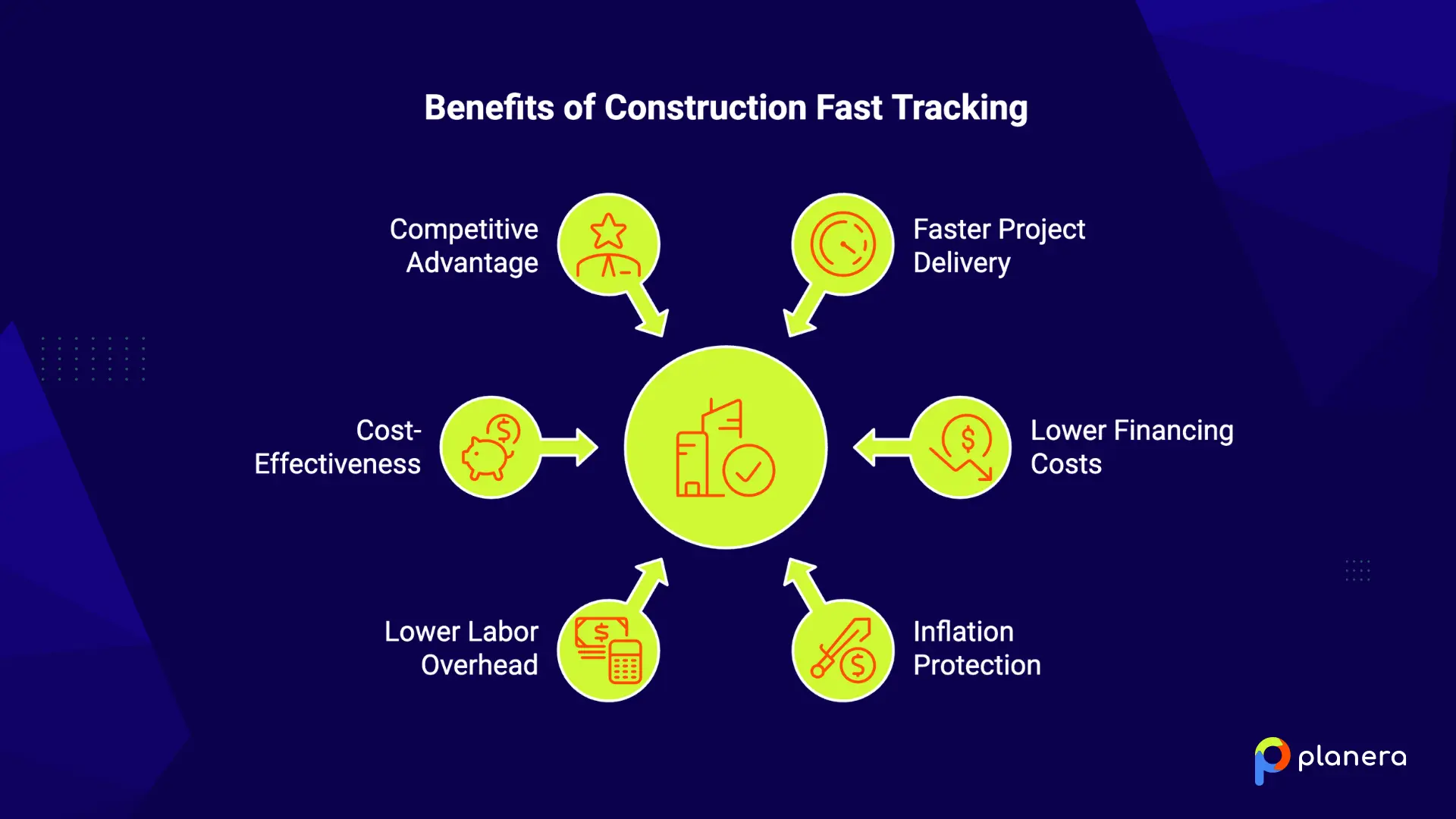
- Faster project delivery: The biggest benefit is a shorter project timeline. Earlier completion means owners can occupy, operate, or generate revenue from the building sooner.
- Lower financing costs: Finishing a project faster can reduce the length of construction loans and other financing expenses, helping lower overall project costs.
- Better protection against inflation: Early procurement allows teams to secure materials sooner, reducing exposure to future price increases and supply chain fluctuations.
- Lower labor overhead: A shorter schedule often means fewer labor hours spread across the life of the project, helping improve overall efficiency.
- More cost-effective than some other schedule acceleration methods: Unlike schedule crashing, which often requires additional crews, overtime, and higher labor costs, fast tracking shortens the timeline by overlapping activities whenever possible.
- Competitive business advantage: For commercial projects, opening sooner can create a significant advantage. Businesses can start generating revenue earlier, attract tenants sooner, or bring products and services to market ahead of competitors.
Common Risks and Challenges of Construction Fast Tracking
The same overlap that helps fast-track projects finish sooner can also create additional risks. Teams need to understand these challenges before deciding to accelerate a schedule.
- Incomplete designs can lead to rework: Construction often starts before the full design is complete. If design changes happen later, teams may need to redo work that has already been completed, leading to added costs and delays.
- Cost uncertainty: Because design and construction happen at the same time, it can be harder to establish a final project cost early in the process. Budgets may continue to change as the project progresses.
- Higher coordination requirements: Fast-tracked projects involve multiple teams working in parallel. This requires strong communication and coordination to prevent conflicts, missed handoffs, and scheduling issues.
- Increased pressure on project teams: Fast tracking often requires quicker decisions and faster problem-solving. The pace can create additional stress for project managers, designers, contractors, and field teams.
- Greater impact from scope changes: Design changes become more difficult and expensive when construction is already underway. Even small revisions can affect multiple work areas and disrupt the schedule.
- Not every activity can be accelerated: Some construction tasks have strict dependencies and must happen in a specific order. Trying to overlap activities that depend on each other can create conflicts, rework, and delays.
Fast tracking can be highly effective, but it requires careful planning, strong communication, and a clear understanding of project dependencies to succeed.
Best Practices for Managing Construction Projects Fast Tracking
Fast tracking can shorten project timelines, but it requires strong planning and execution. These best practices help teams stay on schedule and reduce risk.
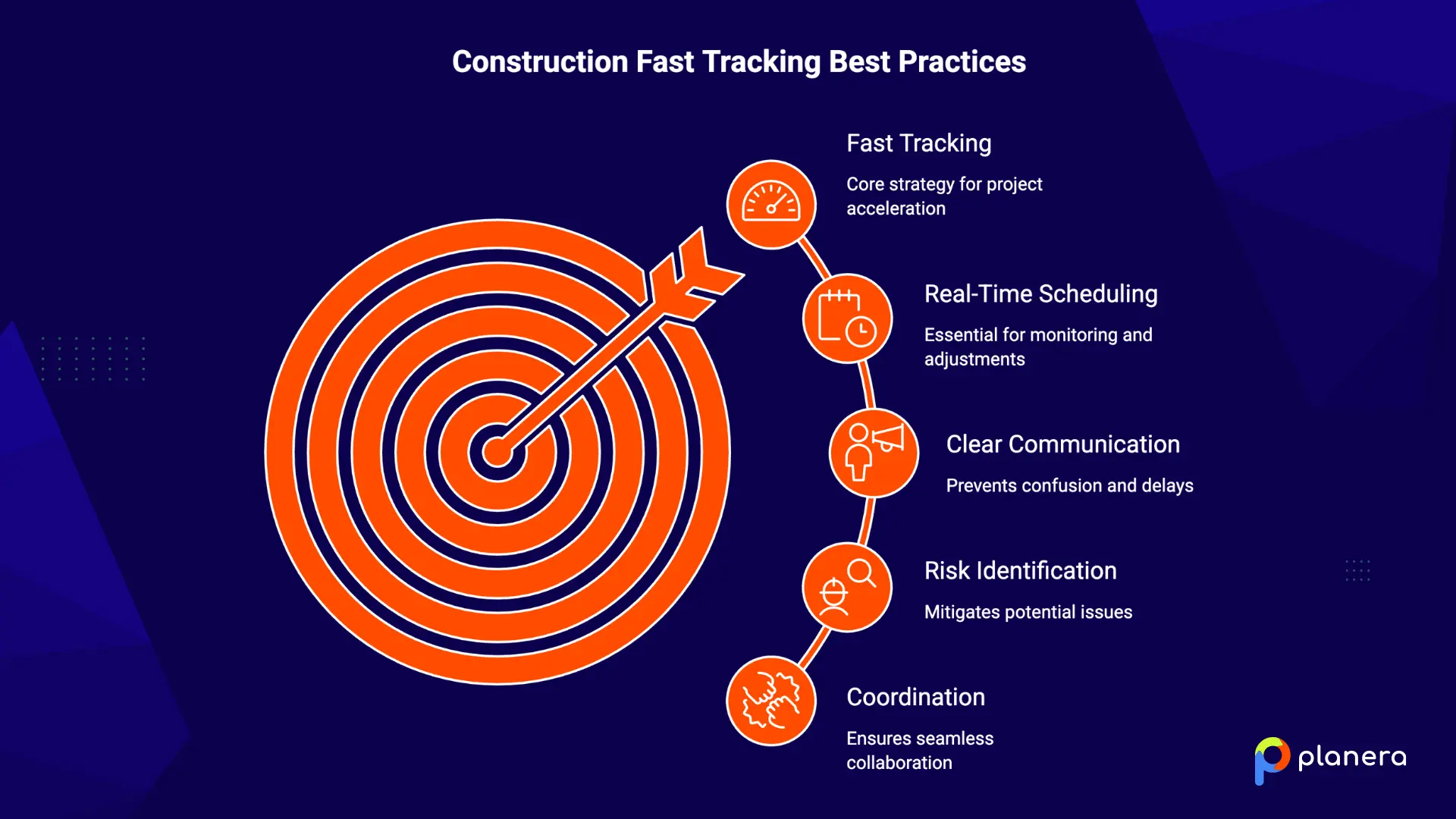
Improve Coordination Between Design and Construction Teams
Fast-tracked projects depend on close collaboration between designers, contractors, and owners. Teams should establish coordination processes early and plan for phased design delivery from the start. Regular coordination meetings help keep everyone aligned as design and construction move forward at the same time.
Identify Risks Early
Before construction begins, teams should review project dependencies, long-lead materials, and potential schedule constraints. A thorough critical path analysis can help identify which activities can safely overlap and which must remain in sequence. Finding risks early is one of the best ways to avoid costly delays later in the project.
Establish Clear Communication Processes
Fast-tracked projects require quick decisions and consistent communication. Teams should define how RFIs, design changes, approvals, and project issues will be handled before work starts. Clear communication processes help reduce confusion and prevent small issues from turning into schedule delays.
Use Real-Time Scheduling and Progress Tracking
Schedules can change quickly on fast-tracked projects, making real-time visibility essential. Construction scheduling tools with dependency tracking, Gantt charts, and live progress updates help teams monitor performance and adjust plans as conditions change. This allows project teams to identify issues early and keep the schedule on track.
How Fast Track Construction Scheduling Software Helps Manage Complex Projects
Fast-tracked projects require constant coordination. When multiple workstreams are running at the same time, teams need to understand dependencies, track progress in real time, and quickly adjust schedules when conditions change.
Planera, as a leading construction scheduling software, helps construction teams manage this complexity through a visual, collaborative scheduling platform built specifically for construction. Instead of relying on static schedules that quickly become outdated, teams can build, update, and review schedules together in real time.
We support CPM scheduling, dependency management, critical path analysis, and construction pull planning workflows, giving teams the visibility they need to manage overlapping activities. Project managers can quickly see how delays, design changes, or material issues affect downstream work and make adjustments before they impact the overall schedule.
Because Planera is collaborative by design, office and field teams work from the same source of truth. Everyone can see schedule updates, identify conflicts, and coordinate work without waiting for new schedule exports or manual updates.
For fast-tracked projects, where timing and coordination are critical, Planera helps teams stay aligned, reduce scheduling risks, and keep work moving forward. It gives project teams a more flexible way to manage complex schedules, especially for teams looking for Primavera P6 alternatives that are easier to use collaboratively.
If you're looking for a better way to manage fast-tracked projects, schedule a demo with Planera, and we’ll help your team stay aligned and deliver projects faster.
FAQ
What is fast-tracking construction?
Fast-tracking construction is a project delivery method where design, procurement, and construction phases overlap and run concurrently rather than sequentially, compressing the overall project timeline.
How does construction fast tracking work?
The project design gets divided into packages. Construction begins on completed packages while design continues on later ones. Long-lead materials are ordered early, and concurrent workstreams allow multiple activities to proceed simultaneously along the critical path.
What are the advantages of construction fast tracking scheduling?
The main advantages are faster project delivery, earlier revenue generation for owners, reduced construction loan costs, protection against material price inflation, and lower labor overhead compared to a longer sequential timeline.
What are the risks of construction fast tracking?
The primary risks are design-driven rework, which accounts for up to 52% of cost growth, cost uncertainty at contract signing, high coordination demands, team burnout, and cascading delays when parallel work streams conflict.
Is construction fast tracking more expensive?
Not necessarily. Fast tracking changes task sequencing rather than adding resources, which makes it lower-cost than crashing. If rework happens because of incomplete designs, though, total project costs can climb past the original estimate.
What types of projects benefit from fast tracking?
Projects with hard deadlines or high time-sensitivity: commercial high-rises, hospitals and healthcare facilities, industrial plants, schools, infrastructure, and emergency or disaster recovery construction.
What is the difference between fast track and traditional construction?
Traditional construction follows a sequential design-bid-build process with a fixed price set before construction begins. Fast tracking overlaps phases to deliver faster, but the final cost is not fully known at the outset, and coordination demands run higher.
How do you manage a construction project fast tracking successfully?
Successful fast tracking takes experienced project management, critical path method analysis, early risk identification, a clear construction milestone schedule, and real-time scheduling software to track parallel work streams.

You deserve better scheduling software.
Drive revenue, reduce costs, and manage scheduling with Planera.
Request a Demo